Failure happens, mistakes too, but what is the take away from facing them that we then can use to grow and learn?
Bread is a staple in our lives. Bread comes in many forms, in many ways.
If you choose to have faith and a belief in God, you learn about how bread is important and valuable in life. The bread that feeds your spiritual life is that of which comes from following Jesus.
Bread in itself, when made well, can be nourishing to your body and feeds your physical side.
When it comes to making your own bread, it can feed you mentally and emotionally, while satisfying a spiritual and physical side.
I enjoy making bread. Beyond that, my family enjoys eating all the different possible bread versions I’ve made and they seem to prefer the homemade over store bought any day. A homemade loaf can get eaten through in a few days, whereas a store bought loaf (no matter if it is the cheap kind or a more expensive loaf) can sometimes still be around weeks later.
Recently I began a Run Back to Your Roots challenge. Each month there is a focus on a specific theme, that is then broken down into a daily/weekly focus. Using recipes, community, how to’s, resources, and more to build on your skills or to learn more in depth on certain topics. It is opening yourself up to try new ideas or ways of doing something or learning more about a baking, cooking, gardening, fermenting, buying local, all natural and so much more. If you want, you can still join in over at Jones Roots: https://www.jonesroots.com/registration
In January, there was a lot on bread baking. Beyond searching for a recipe here or there on making sandwich bread, or biscuits, or cornbread, I hadn’t done a whole lot of experimenting. I had found our go to recipes for the bread items we enjoy most and use the most in our house. And then I would take the basic recipe and change the form of it to turn it into something like hamburger buns or garlic twist bread for instance.
After being inspired by the January theme for Run Back to Your Roots, I decided to give my best try at making other types of bread. Sourdough and a honey wheat sandwich bread, two of our favorite breads in our house.
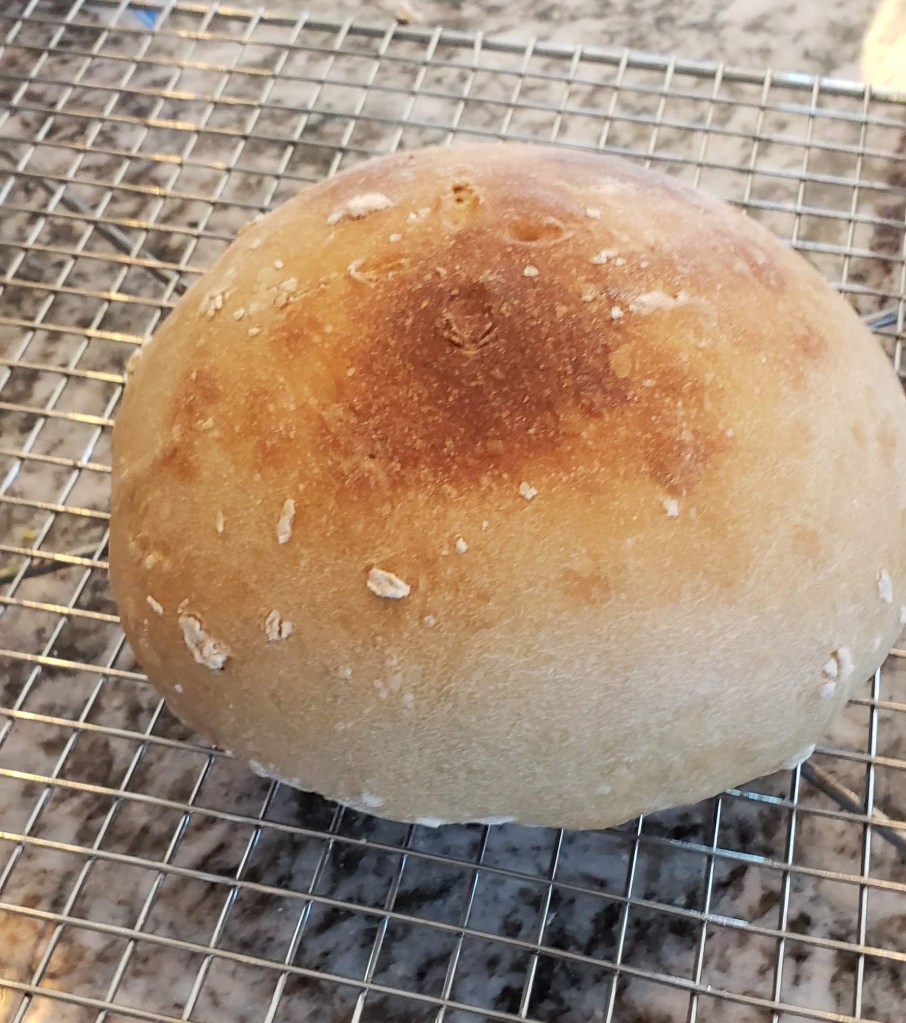
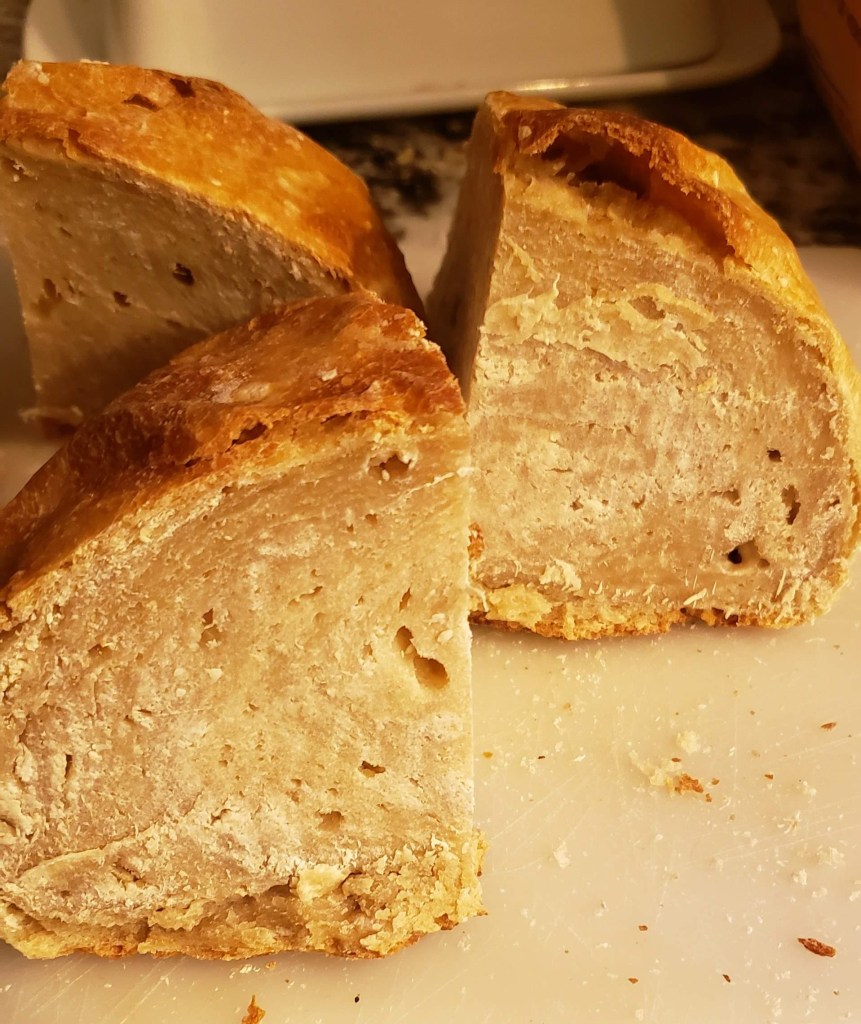
I got my starter going for sourdough and when I thought it was ready, I gave it my best go to make a loaf of bread. It looked ready enough, I thought and ready to go into the oven. It looked good after it baked. When I took it out of my Dutch oven, that is when I realized that something wasn’t quite right. It didn’t feel quite right, like the loaves I’ve gotten from the store. It felt like it weight a good 5 pounds! When I went to cut it, the inside was so dense. I tossed it out to the squirrels, landing with a thunk and even they wouldn’t touch it.
That next day, I began the process of some honey whole wheat bread. Again, a new recipe, but figured easier than the sourdough. It was going fine, but I forgot one crucial thing…temping the bread to make sure it was done. By far the easiest way to make sure it is done and the most accurate, yet this time, I forgot. Oh well, looked done and sounded hollow when tapped.
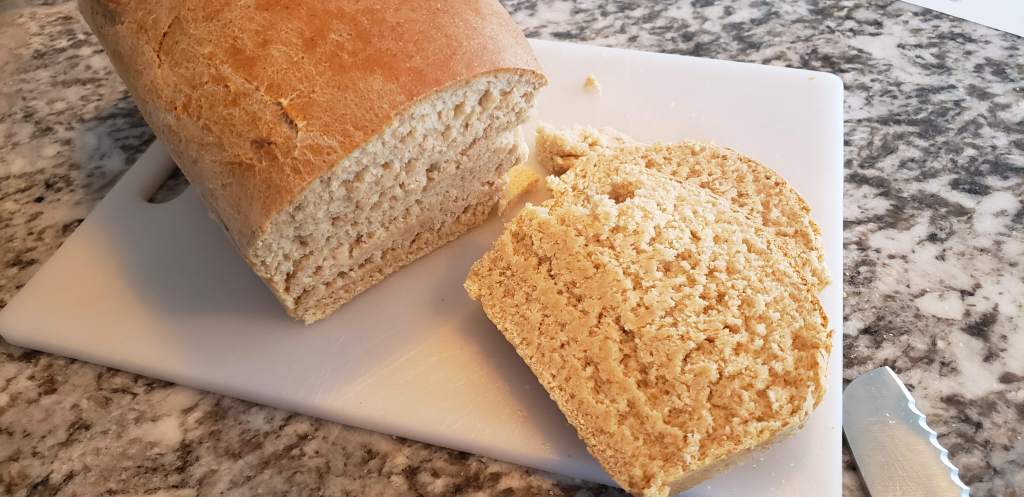
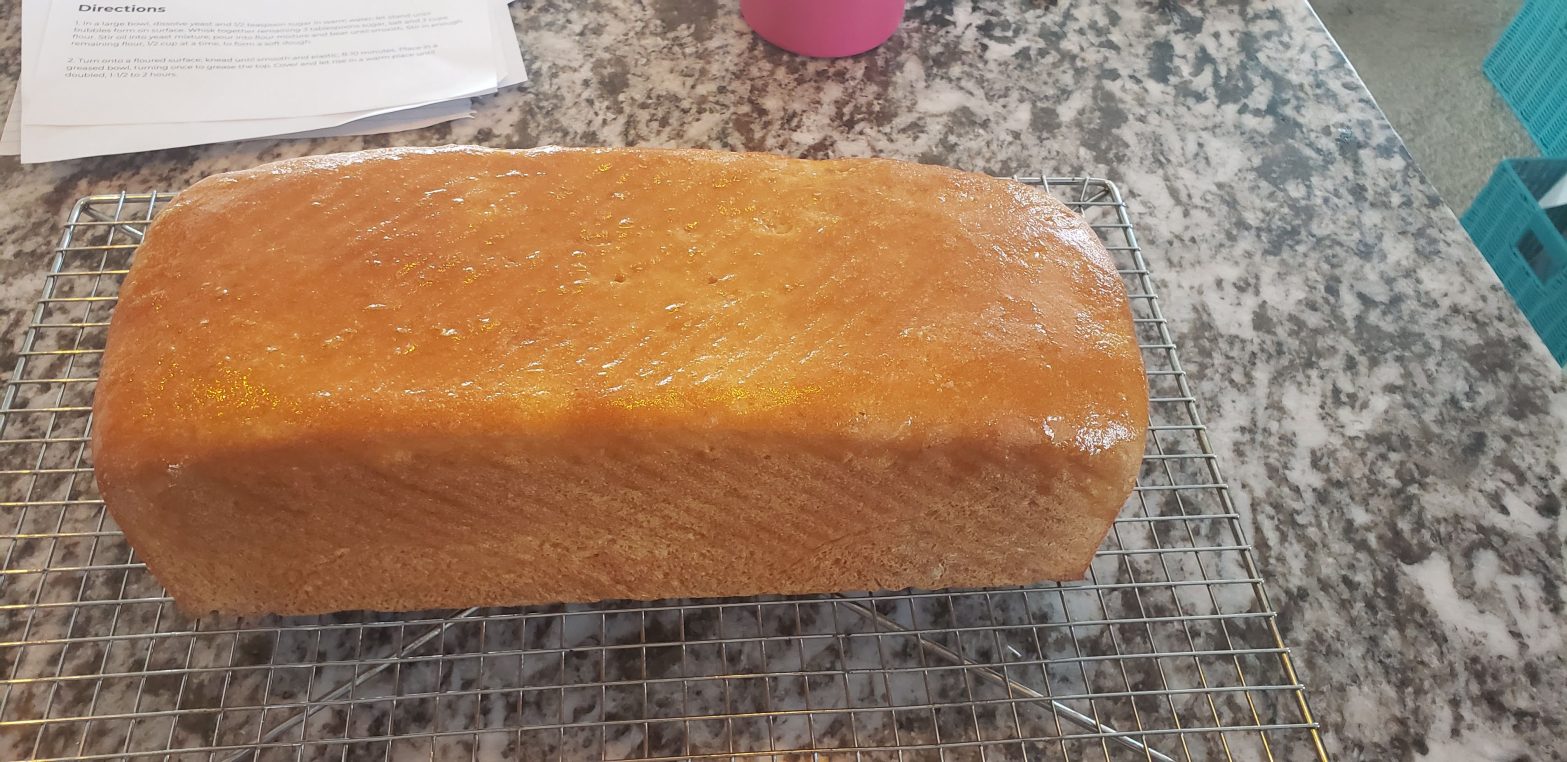
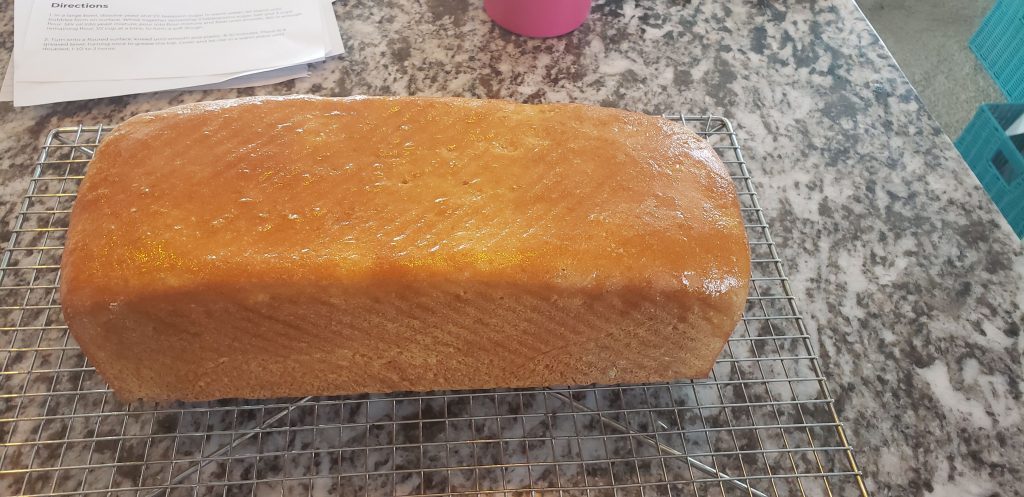
I went to cut into it to try it, it was good. I thought, hey I’ve got this figured out and we have a good wheat sandwich bread. The next day, Raun cut into it to make a sandwich, only to find out, it wasn’t done in the middle. I looked at it and thought, well maybe we can salvage some of it and make a French toast type bread pudding. That turned out delicious and everyone liked it. And I didn’t have to throw away that much of the bread.
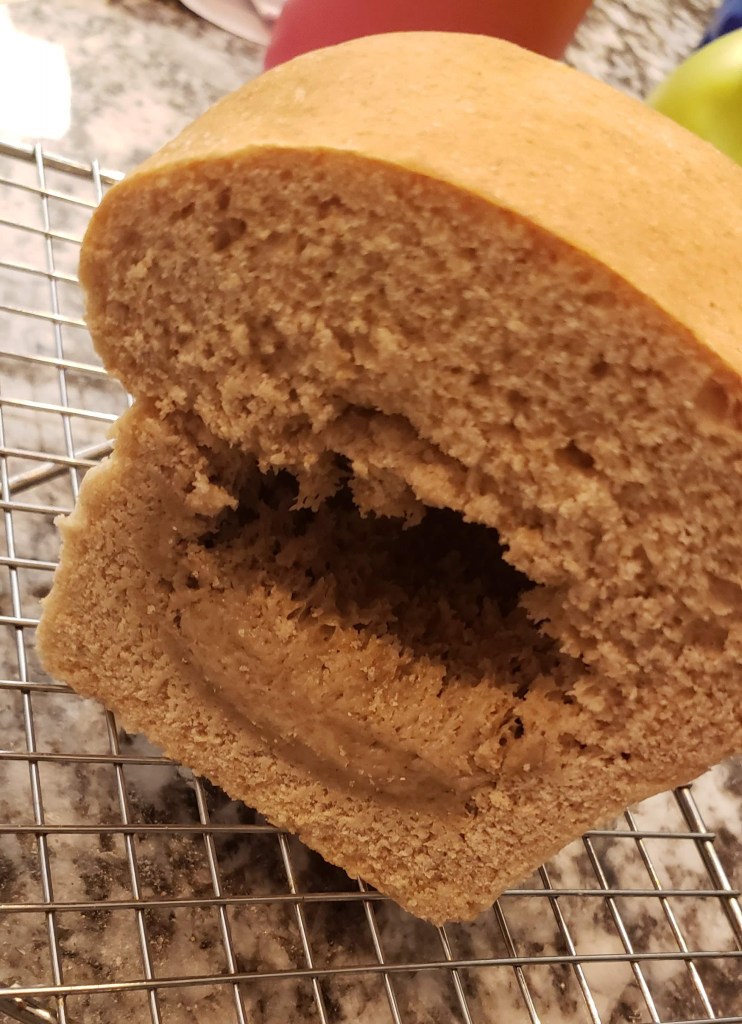
So, the next day, I tried again and yet still, had another oops. This time, instead of typing 375 degrees into the temp on the oven, I did 575. I didn’t realize it until I went to take it out and saw how dark on the outside it was and it was done in less time than usual. Fortunately, it was still soft and moist on the inside. It just had a thicker, crunchier crust. Which for some, makes it even better of a bread. In our family, not so much.
Over the course of those few days, my oldest was facing his math school work and how it is okay to make mistakes. Math is a subject he struggles in at times because of getting answers wrong or not being open to us helping guide him, but also an attitude, that all too often, carries throughout the rest of his day or activities. It is okay and good to make mistakes, to fail. But how do we handle them in the moment and going forward? Acknowledge what happened, what can you learn or take away from it, adjust and grow, then be ready the next time around.
I tried, two new to me ways of making bread. I failed, both of them and even failed a second attempt on one.
We used it to show our kids that no matter how old you are you can still make mistakes and can still fail. And that it is from making those it is how we grow and learn. But, you can also try new things and learn to face failure as a chance to grow, but also try again.
How do you handle failure? I know I don’t always handle it well. Sometimes it shows on the outside, but often it sticks on the inside and continues to pull at me. Sure, there are many times when I give up or want to give up. Throw in the towel so to speak and walk away. In the end, if it is something that I want to strengthen, learn to do, hone in my skillset then I do come back to it at some point. Because sometimes when we fail, we do need to take a break. But not give up, at least not yet, and come back to it to give it another go around. Even if it is only a small amount better the next time around, it is still growth and there is a lot that can come from that.
Awhile back I came across an acronym for the word fail: first attempt at learning. So, what have you recently failed on? Have you given up on it or given it another go around? If you gave up, what is holding you back from trying again? Maybe a shift of mindset, a different perspective can give you the next steps, motivation to try again, or help to see the bigger picture down the road of giving it another go.
Each time I make bread I read up a little more on technique to see what I can do to improve my skills. Something I learned from failing at bread making was that while one of the loaves wasn’t cooked all the way through, there was still enough to salvage and turn into something else to it. Had I let my failed attempt get to me, I would have chucked the loaves out to the squirrels. But instead I let my mind get creative and come up with a way to use the good parts of the bread.
As I make a loaf of bread, I am now feeling a connection between my hands, heart, and the dough. It fills my heart making the bread, especially kneading the dough. But I can feel how the dough is and what it needs. Whether it needs more flour or more time, I can tell as I let the dough move between my hands and the counter.
A lot can be said for the baking process. It is in the wait time that we can learn to listen, to be present, to take it in. There comes a certain point when you can begin to smell the bread baking. If you don’t pause a moment you may not even notice it. When the timer goes off, first instinct to check to see if it is golden brown yet. If it is, then it is to thump it to see if it sounds hallow. This is the point where I have learned to go one more step. I have had many times before where this is where I stop. Sometimes I get lucky and the dough is cooked through, other times not so much. I am learning to remember to temp the bread. It may look ready on the outside, but you don’t know what the inside shows. Just like us, you can look ready on the outside, but on the inside your heart or mind may not be. You may need more time.
The more I make bread, the more I feel more of a connection between my hands and dough. As I keep making loaves, I am finding out how I enjoy making it, especially kneading it by hand. Before, I almost always used the mixer. But since I started making recipes that require more flour than my mixer can hold, I have been mixing by hand and kneading on the counter. There is something about dumping the dough on the counter and using your hands to work it, bring all the ingredients together, and form it. It is very peaceful.
Despite the errors I’ve made and will continue to make when it comes to making bread, it fills me in many ways to make a loaf of bread. It also teaches me and translates to other areas of life. Life is all about making mistakes and fails, learning and growth, joy and successes. I know I will continue to make errors. I also know I will continue to make adjustments. And lastly, I will always be learning and growing.
Then Jesus declared, “I am the bread of life. Whoever comes to me will never go hungry, and whoever believes in me will never be thirsty.” ~ John 6:35 NIV

